
RuneScape Dares to Rewrite MMO Economics: Unpacking Jagex’s Grand Exchange Revolution










Popular Now
 Gacha Club
 Toca Boca World
 CarX Street
Among Us
CarX Street
Among Us
 Roblox
Black Myth: Wukong
NBA 2K24
Roblox
Black Myth: Wukong
NBA 2K24
 Grand Theft Auto V
 Schedule I
 Free Fire Max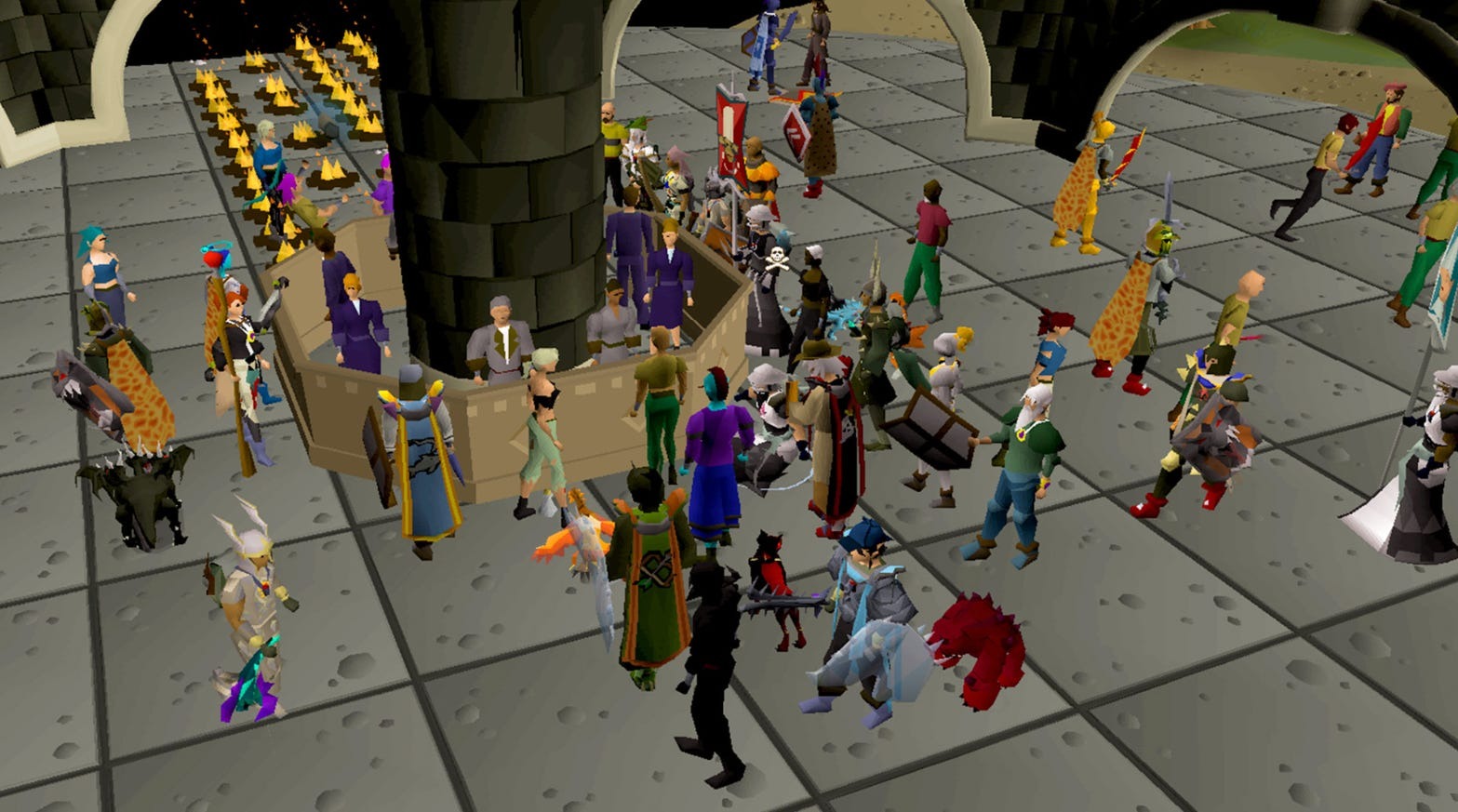
RuneScape Dares to Rewrite MMO Economics: Unpacking Jagex’s Grand Exchange Revolution
In an industry often characterized by cautious iteration and adherence to established norms, Jagex, the developer behind the venerable massively multiplayer online role-playing game (MMORPG) RuneScape, is poised to execute a strategic maneuver that few, if any, contemporary developers would contemplate. This audacious decision, centered around a radical overhaul of the Old School RuneScape (OSRS) in-game economy, specifically the removal of trade quantity limits on high-value items within the Grand Exchange, represents a profound gamble. It is a bold, almost defiant, move designed to combat entrenched issues like real-world trading (RWT) and botting, signaling a potentially transformative shift in how virtual economies are managed in the digital age.
For decades, many MMORPGs have grappled with the complex interplay of player freedom, economic stability, and the pervasive shadow of illicit activities. Jagex’s latest initiative, however, is not a minor patch or a superficial adjustment. It is a fundamental re-evaluation of core economic principles governing one of the most enduring online game worlds. This news is set to send ripples across the entire gaming industry, prompting discussions about developer courage, player agency, and the very future of in-game commerce. Understanding the gravity of this decision requires a deep dive into RuneScape’s unique history and the economic challenges it has persistently faced.
The Genesis of a Grand Dilemma: Why Trade Limits Existed
The Grand Exchange (GE) in Old School RuneScape has long been the pulsating heart of its player-driven economy. It’s a central marketplace where adventurers buy and sell virtually all in-game items, from basic supplies to rare artifacts. However, to mitigate market manipulation, price fixing, and the efficiency of real-world traders and bots, Jagex implemented daily trading limits on specific items. These limits, while intended to create friction for malicious actors, often inadvertently hampered legitimate players and introduced inefficiencies into the game’s highly complex digital marketplace.
The rationale behind these limitations was sound at the time of their inception. By restricting how many high-value items, such as certain gear or resources, a single player could buy or sell within a given timeframe, Jagex aimed to make it harder for bot farms to rapidly acquire and dump goods for real money. It also aimed to prevent individuals or small groups from cornering markets and dictating prices, thus protecting the integrity of the virtual goods market. Yet, as the game evolved and the sophistication of those engaging in RWT and botting increased, these measures proved to be increasingly porous, creating more frustration for legitimate users than actual deterrence for illicit operations.
Decoding the Change: What the GE Limit Removal Entails
The core of Jagex’s daring new policy is the outright removal of trade quantity limits for a significant category of high-value items on the Grand Exchange. This means that players will now be able to buy or sell any number of these previously restricted items in a single day, dramatically increasing market liquidity and reducing the friction associated with large-scale trading. While specific items subject to this change are still being detailed, the overarching philosophy is clear: empower legitimate players and make the economic landscape less favorable for illicit activities by disrupting their established operational models.
This is a pivot from restrictive control to a strategy of open market dynamics. The developers are betting that by making legitimate, high-volume trading easier and more efficient, they can outmaneuver the less agile and often more complex methods employed by RWT operators and bot networks. The theory posits that if the legal market can provide better efficiency and price discovery, the incentive to engage with the black market – which relies on high friction in the legitimate market – will diminish. It’s an act of economic Judo, using the market’s own force to subdue its adversaries.
High Stakes, Higher Rewards? Analyzing the Risks and Potential Benefits
This decision is not without its monumental risks. The immediate concern for many players and analysts is the potential for significant market volatility. With limits removed, there is an increased possibility of sudden price swings, rapid shifts in supply and demand, and even short-term economic instability. Critics fear that without the friction of trade limits, sophisticated market manipulators (even legitimate ones, or those operating on the fringes) could exploit the newfound freedom to their advantage, potentially destabilizing the game’s economy and harming less savvy or casual players. The specter of rampant inflation or deflation in key item categories looms large.
Furthermore, the effectiveness against RWT and botting is yet to be proven. While Jagex argues that increased liquidity will make it harder for bot farms to operate efficiently by eliminating bottlenecks and making their inventory management less predictable, the criminal element is notoriously adaptable. There’s a chance they might simply find new methods or exploit the new market conditions in unforeseen ways. The move could also inadvertently incentivize more players to engage in large-scale flipping or speculative trading, transforming the gameplay experience for some from adventure and skill-building to pure economic arbitrage.
However, the potential benefits are equally compelling and could fundamentally enhance the player experience. By removing artificial barriers, Jagex aims to:
- Combat Real-World Trading (RWT): Make it more difficult and less profitable for RWT operations to transfer large quantities of items efficiently, as their unique advantage of circumventing GE limits would be nullified.
- Improve Player Quality of Life: Legitimate players engaging in high-volume crafting, skilling, or wealth accumulation will experience a smoother, less time-consuming trading process, improving overall player engagement.
- Enhance Market Efficiency: Prices are expected to react more quickly to supply and demand, leading to more accurate and reflective market values, which can be beneficial for long-term game economy health.
- Reduce Botting Incentives: By disrupting the economic models that drive botting, the move could make bot operations less profitable and more vulnerable to detection, contributing to a cleaner game environment.
- Foster a Dynamic Economy: The removal of limits could inject new dynamism into the GE, creating more diverse trading strategies and opportunities for savvy entrepreneurs within the game.
The success of this initiative hinges on Jagex’s ability to monitor the economy closely, adapt swiftly to unforeseen consequences, and communicate transparently with its dedicated player base. This is a testament to the developers’ commitment to the long-term viability of RuneScape, even if it means taking controversial stances.
The Economic Ripple Effect: Impact on Players and Market Stability
The immediate aftermath of such a dramatic economic policy change is expected to be turbulent. Short-term price fluctuations for high-value items are almost a certainty. Savvy investors and experienced traders within the OSRS community are already strategizing on how to navigate this new landscape, potentially leading to a period of intense competition and market speculation. For the average player, this could mean that acquiring certain expensive items might become easier or harder depending on how the market reacts, impacting their progression and access to top-tier digital assets.
Jagex’s proactive stance in addressing deep-seated economic issues demonstrates a commitment to sustainable game development. Instead of merely patching symptoms, they are attempting to address root causes of RWT and botting, which have been persistent thorns in the side of many online games. This move places a tremendous amount of trust in the natural forces of market economics, betting that a freer, more fluid system will ultimately be more resilient and harder for illicit actors to exploit than one shackled by artificial restrictions.
A Precedent for the Industry? RuneScape’s Daring Economic Experiment
RuneScape’s decision is not just about its own game; it’s a potential bellwether for the entire online gaming economy. If Jagex successfully navigates this transition and achieves its objectives of curbing RWT and improving the player experience without destabilizing its market, it could set a powerful precedent. Other MMORPG developers, constantly battling similar challenges in their own virtual economies, will undoubtedly be watching closely. This bold move could inspire a new wave of innovative economic strategies across the industry, moving away from restrictive measures towards more dynamic, market-driven solutions.
In a world where microtransactions and battle passes dominate revenue models, Jagex’s focus on refining the core player-driven economy, even with significant risk, stands out. It highlights a developer willing to prioritize game health and player integrity over immediate, conservative stability. This makes RuneScape not just a game about fantasy adventures, but also a living laboratory for digital economics. The coming months will reveal whether this calculated gamble pays off, cementing Jagex’s reputation as both an innovator and a bold guardian of its beloved game world. This isn’t just a game update; it’s an economic revolution in the making, proving that sometimes, the most audacious moves yield the most profound results for player experience and the longevity of an online title.